The culinary world often romanticizes high-end, exquisitely designed cookware, yet the true workhorses of the kitchen are frequently found in the commercial sector. For many home chefs, the appeal of professional-grade tools lies in their promise of durability, consistent performance, and no-nonsense functionality. Among the stalwarts of this category, Winco stands out as a pervasive name, a brand synonymous with equipping bustling restaurant kitchens worldwide. This review delves into Winco’s commercial-grade stainless steel cookware, exploring its construction, performance characteristics, and overall value, to help you determine if it’s the right fit for your culinary endeavors, whether professional or domestic.
Why Choose Commercial Grade Stainless Steel Cookware?
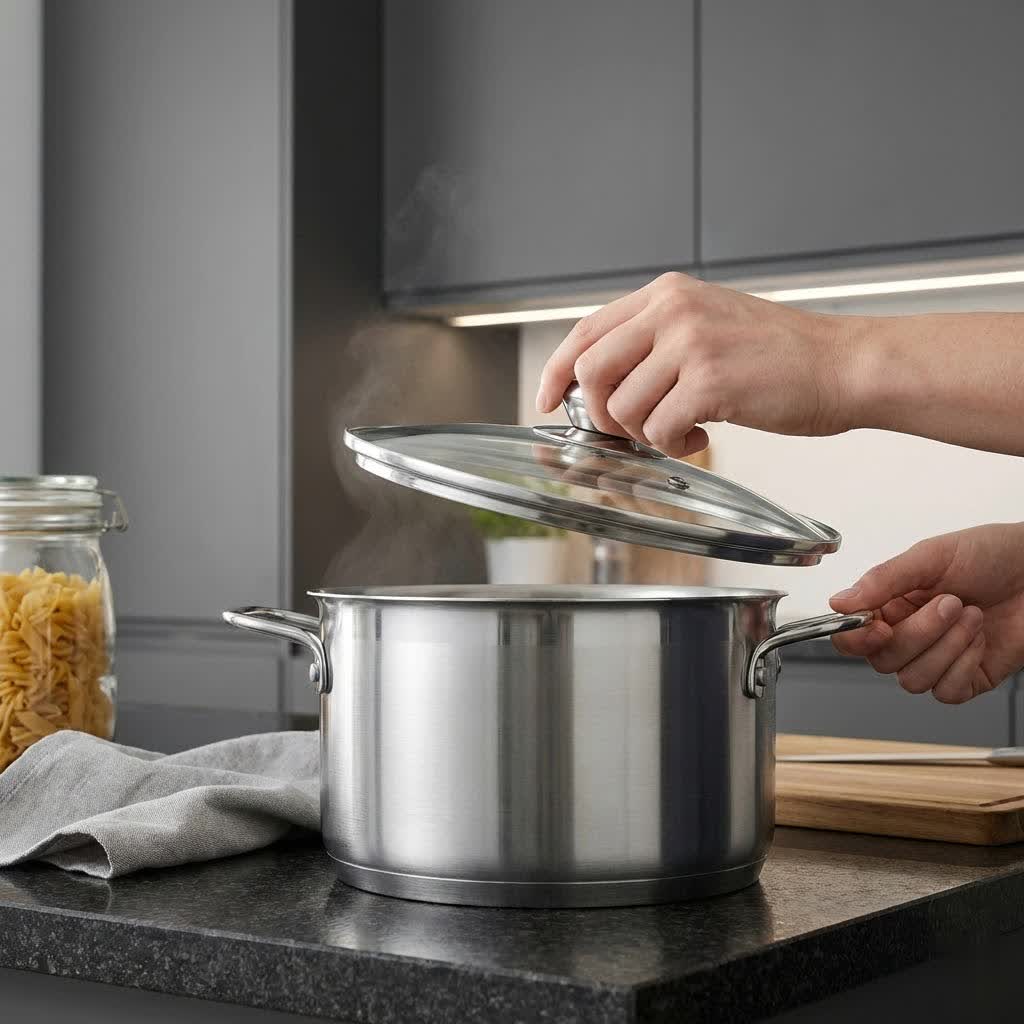
Opting for commercial-grade stainless steel cookware offers a multitude of advantages that resonate with both seasoned chefs and home cooking enthusiasts. Primarily, these pieces are engineered for extreme durability, designed to withstand the rigors of high-volume, continuous use in professional environments. This inherent robustness translates to a significantly longer lifespan in a home kitchen, often outlasting conventional consumer-grade options. Beyond longevity, stainless steel is prized for its safety, being non-reactive with acidic foods, and its ease of cleaning, typically requiring simple soap and water. Its excellent heat retention and sturdy build ensure reliable performance, making it a sound investment for any kitchen.
Understanding Winco Stainless Steel Cookware
To truly appreciate Winco’s offerings, it’s essential to grasp what “commercial grade” signifies in their context. Unlike many consumer brands that prioritize aesthetics and innovative features, Winco’s focus is squarely on uncompromising functionality, resilience, and cost-effectiveness for busy kitchens. This means their cookware is built to endure constant abuse, frequent temperature changes, and rigorous cleaning without faltering.
Winco primarily utilizes durable stainless steel alloys for its cookware, often featuring heavy gauges that resist warping and denting. A key characteristic that often differentiates Winco from premium consumer brands like All-Clad is its construction. While some Winco lines, such as their “Tri-Gen Tri-Ply,” offer fully clad designs where an aluminum core extends up the sides of the pan for superior, even heat distribution, many of their more common commercial pieces feature a disc-bottom construction. In these models, a thick aluminum core is encapsulated only at the base of the pan. This design efficiently conducts and retains heat at the bottom, which is often sufficient for commercial stovetops with powerful, uniform burners. Handles are typically robust, riveted in place with six points of attachment for secure handling, built for strength rather than ergonomic luxury.
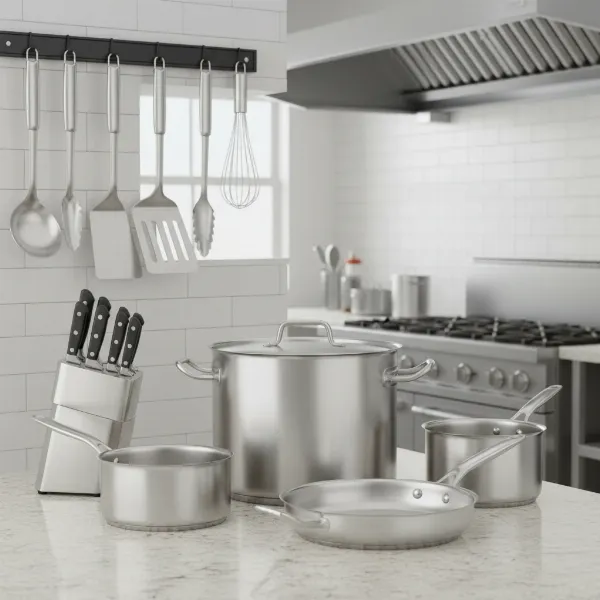 An assortment of Winco commercial-grade stainless steel pots and pans on a kitchen counter, highlighting their sturdy and functional design.
Performance Analysis: Pros and Cons of Winco Cookware
Winco commercial-grade stainless steel cookware, while a favorite in professional settings, presents a unique set of pros and cons when evaluated for broader use. Understanding these can guide your purchasing decision.
Pros: Built for the Battle
- Exceptional Durability and Longevity: Winco products are designed to withstand the relentless demands of a commercial kitchen. This means they are incredibly sturdy, resisting warping, dents, and heavy impact, translating to a product that can last for decades in a home environment.
- Unbeatable Value for Money: One of Winco’s most compelling attributes is its affordability. It offers professional-grade quality and performance at a fraction of the cost of high-end consumer brands, making it an excellent investment for budget-conscious buyers seeking uncompromising robustness.
- Versatility in Use: Many Winco stainless steel pieces are induction-ready and suitable for a wide range of cooking tasks, from searing and sautéing to boiling and braising. Their robust construction often makes them oven-safe to very high temperatures.
- Ease of Cleaning: Like all quality stainless steel, Winco cookware is non-reactive and relatively easy to clean. Food residue typically comes off with standard dish soap and warm water, and most pieces are dishwasher safe, though handwashing is often recommended for longevity.
|
Our Picks for the Best Stainless steel pot set in 2026
As an Amazon Associate I earn from qualifying purchases.
|
||
| Num | Product | Action |
|---|---|---|
| 1 | MICHELANGELO Stainless Steel Saucepan Set with Lids 1QT & 2QT & 3QT, Stainless Steel Sauce Pot Set 6pcs, Induction Saucepans, Nonstick Sauce Pan Set, Dishwasher Safe |

|
| 2 | 3 Ply Stainless Steel 11-Piece Cookware Set with Lids, Pots and Pans Kitchen Set, Non-Toxic, Induction, Oven, Dishwasher Safe, Professional Chef Quality |
|
| 3 | Cuisinart 17-Piece Stainless Steel Cookware Set, Chef's Classic Steel Collection with Pure Aluminum Core for Quick and Even Heat, Cool Grip Handles, Dishwasher Safe, 77-17N |
|
| 4 | Mueller 17-Piece Stainless Steel Pots and Pans Set – Tri-Ply Ultra-Clad Pro Cookware Set, Induction Ready, Oven Safe, Even-Heat Aluminum Core, Includes Skillets, Saucepans, Dutch Oven, Stockpot |
|
| 5 | Hunnycook Stainless Steel Cookware Set - 15 Pieces Pots and Pans Set, Includes 6 Pots and Pans, 6 Lids and 3 Utensils, Fixed Handles, Induction Safe and Dishwasher Safe |
|
| 6 | Cuisinart Chef’s Classic 11-Piece Stainless Steel Pots and Pans Set, Cookware Set Compatible with Induction, Electric, Gas Cooktops, Aluminum Core for Even Heat, Cool Grip Handles, Dishwasher Safe |
|
| 7 | Cuisinart 7-Piece Stainless Steel Pots and Pans Set, Cookware Set Compatible with Induction, Electric, Gas Cooktops, Aluminum Core for Quick Even Heat, Cool Grip Handles, Dishwasher Safe, Oven Safe |
|
| 8 | Stainless Steel Cookware Set - 20 PCS Pots and Pans Set with 3-Ply Stainless Steel Frying Pan, Professional Kitchen Cooking Set, Induction Compatible, Oven & Dishwasher Safe |
|
| 9 | Cuisinart 12-Piece MultiClad Pro Triple Ply Stainless Stainless Steel Pots and Pans Set, Cookware Set Compatible with Induction, Electric, Gas Cooktops, Cool Grip Handles, Oven Safe to 500°F, Silver |
|
| 10 | Cook N Home Kitchen Cookware Sets, 12-Piece Basic Stainless Steel Pots and Pans, Silver |
|
Cons: Compromises for Commercial Efficiency
- Heat Distribution Variability: For disc-bottom Winco pans, the aluminum core is confined to the base. While this provides excellent heat at the bottom, heat distribution might not extend as evenly up the sides compared to fully clad cookware. This can lead to hot spots if not managed properly, particularly on less powerful home stovetops.
- Functional Aesthetics and Ergonomics: Winco prioritizes utility over design flair. Handles, while incredibly sturdy due to robust riveting, may not always be as ergonomically comfortable or as polished as those found on premium consumer-grade cookware. The overall finish is functional rather than luxurious.
- Weight: Commercial-grade cookware tends to be heavier due to its thicker gauge materials. While this contributes to durability, it can make handling large pots or pans more challenging for some users.
Winco vs. The Competition: A Comparative Look
When considering Winco commercial-grade stainless steel, a natural comparison arises with other brands, both high-end and mid-range.
Winco vs. High-End Brands (e.g., All-Clad)
The most striking difference lies in price and construction. Winco is significantly more affordable. Brands like All-Clad are renowned for their full-clad, multi-ply construction that extends the aluminum or copper core all the way up the sides of the pan, ensuring superior, edge-to-edge heat distribution. A Reddit user noted, “If you are accustomed to the performance of a fully clad pan, you will almost certainly be disappointed by the performance of the Winco [disc-bottom pans].” This sentiment highlights that while Winco offers commercial-grade durability, its disc-bottom models might not match the refined heat control of premium fully clad options. However, for sheer robustness and value, Winco often surpasses the expectations set by its price point.
Winco vs. Mid-Range Brands (e.g., Tramontina)
Winco’s Tri-Gen Tri-Ply line competes more directly with mid-range fully clad options like Tramontina Tri-Ply. These brands offer similar performance in terms of even heating due to their clad construction and often similar price points. The primary distinction might come down to brand recognition and consumer-facing support. Tramontina, being a more established consumer brand, might offer a smoother warranty process should an issue arise, as one user pointed out in an online discussion. However, Winco’s legacy in the commercial sphere speaks volumes about its inherent quality and reliability.
Who is Winco Commercial Grade Stainless Steel For?
Winco commercial-grade stainless steel cookware serves various culinary demographics effectively, each drawn to its specific attributes.
- Professional Kitchens: This is Winco’s original and primary target market. Its products are engineered to endure the punishing environment of busy restaurants, where reliability, speed, and durability are paramount. Chefs often praise Winco for its ability to withstand constant heavy use and frequent cleaning cycles.
- Serious Home Cooks on a Budget: For the home chef who prioritizes rugged construction and functional performance over polished aesthetics and brand prestige, Winco offers an unparalleled value proposition. You get professional-grade tools that can handle intensive home cooking without the premium price tag.
- Culinary Students and Enthusiasts: Those just starting their culinary journey or looking to build a robust collection without breaking the bank will find Winco an excellent entry point into high-quality stainless steel cooking. It provides a solid foundation for mastering various cooking techniques.
“Winco cookware isn’t about fancy features; it’s about delivering consistent, reliable performance day in and day out, just like any good line cook expects.” – Chef Antoine Dubois, Head Chef at The Bistro Moderne
Tips for Using and Maintaining Your Winco Stainless Steel Cookware
To maximize the performance and longevity of your Winco commercial-grade stainless steel cookware, proper usage and maintenance are key.
Mastering Stainless Steel Cooking
- Preheat Properly: Always preheat your stainless steel pan before adding oil and food. This helps achieve a non-stick-like surface (the Leidenfrost effect) and prevents food from sticking. Add a few drops of water; if they bead up and dance, the pan is ready.
- Use Enough Oil: Once preheated, add your cooking oil. Ensure the oil shimmers before adding food.
- Avoid Overcrowding: Don’t overcrowd the pan, as this lowers the temperature and steams food instead of searing it.
Cleaning and Care for Lasting Shine
- Cool Down Naturally: Allow the pan to cool completely before washing. Rapid temperature changes can warp the metal.
- Soak if Needed: For stubborn stuck-on food, deglaze the hot pan with water (after removing food) or let it soak in warm, soapy water for a while.
- Gentle Cleaning: Use a soft sponge or cloth with dish soap. For tougher stains or discoloration (like heat tint), Bar Keepers Friend is highly effective at restoring shine without scratching.
- Avoid Steel Wool: Harsh abrasive pads can scratch the surface.
- Dishwasher Use: While many stainless steel items are dishwasher safe, frequent dishwashing can dull the finish over time. Handwashing is generally recommended for maintaining the cookware’s appearance.
 A close-up of a hand polishing a Winco stainless steel pan with a soft cloth, showing a gleaming surface.
Conclusion
Winco commercial-grade stainless steel cookware stands as a testament to the enduring appeal of function over form. It delivers exceptional durability, reliable performance, and significant value, making it a staple in professional kitchens and a smart choice for discerning home cooks. While some models with disc-bottom construction may not offer the same edge-to-edge heat distribution as premium fully clad alternatives, their robustness and affordability often outweigh this consideration, especially for those who prioritize a long-lasting, heavy-duty workhorse. If you’re seeking cookware that can withstand the test of time and culinary challenges without breaking your budget, Winco’s commercial stainless steel deserves a prominent place in your kitchen. Are you ready to equip your kitchen with tools built for the pros?
Frequently Asked Questions
Is Winco stainless steel good for home use?
Absolutely. Winco’s commercial-grade stainless steel is exceptionally durable and reliable, making it an excellent choice for home use. It can withstand daily cooking rigors far beyond what typical consumer cookware might endure, offering long-lasting performance and great value.
Is Winco cookware induction compatible?
Many Winco stainless steel cookware items are induction compatible. Look for specific product descriptions or symbols (like a coiled wire) on the packaging or base of the cookware to confirm induction readiness before purchase.
How do you clean Winco stainless steel pans effectively?
For everyday cleaning, wash with warm, soapy water and a soft sponge. For tougher stains, discoloration, or heat tint, a non-abrasive cleaner like Bar Keepers Friend works wonders to restore the pan’s shine. Always allow the pan to cool before washing to prevent warping.
What is the difference between disc-bottom and full-clad stainless steel cookware?
Disc-bottom cookware has an aluminum or copper core bonded only to the base, providing good heat distribution at the bottom. Full-clad (or multi-ply) cookware features these heat-conducting layers extending throughout the entire pan, including the sides, for superior, more even heat distribution from top to bottom.
What grade of stainless steel does Winco typically use?
Winco, like most reputable stainless steel cookware manufacturers, typically uses 18/8 or 18/10 surgical-grade stainless steel for its cooking surfaces. These designations refer to the chromium and nickel content (e.g., 18% chromium, 8% nickel), which contributes to corrosion resistance, durability, and a polished finish.