As an admin at ReviewHT with over a decade of experience in household appliances, especially stainless steel cookware, I’ve guided countless customers in selecting the ideal pot sets for their homes. My practical expertise and deep market understanding allow me to share truthful and valuable insights, empowering you to make informed decisions for your kitchen. The modern kitchen is a hub of activity, and the tools we use are just as important as the ingredients we choose. In an era where health and wellness are paramount, understanding the safety of our cookware has become a critical consideration for every home chef.
Why Choose Safety-Focused Cookware?
The primary motivation behind opting for safety-focused cookware stems from a growing awareness of potential health risks associated with traditional materials. Many conventional non-stick coatings, for example, have historically contained per- and polyfluoroalkyl substances (PFAS), including PFOA and PFOS. These “forever chemicals” can break down at high temperatures, potentially releasing toxic fumes and leaching into food, posing risks to human health. Embracing cookware designed with safety in mind means choosing materials free from these harmful chemicals, offering invaluable peace of mind. It’s about ensuring that every meal prepared contributes solely to nourishment, without hidden compromises. This commitment to chemical-free cooking is not just a trend; it’s a foundational step towards a healthier lifestyle and a safer home environment for you and your family.
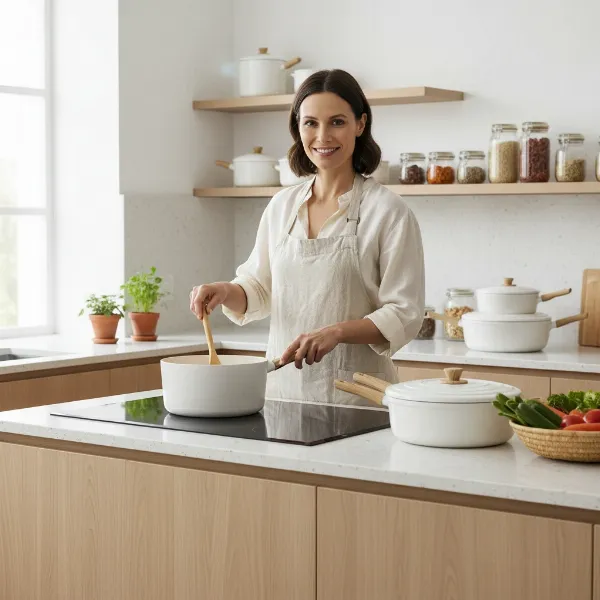 Woman cooking with modern, non-toxic cookware in a bright, clean kitchen, emphasizing safety and health benefits
Types of Safety-Focused Cookware Materials
When navigating the market for healthy kitchen essentials, several materials stand out for their safety and performance. Each offers distinct advantages, catering to different cooking styles and preferences. Understanding these options is key to building a cookware collection that truly prioritizes well-being.
- 100% Pure Ceramic Cookware: Crafted entirely from natural clay and minerals, pure ceramic is a metal-free, non-reactive option. Brands like Xtrema exemplify this category, offering cookware that is exceptionally durable, resistant to scratches and stains, and safe for a wide range of heat sources, including ovens, microwaves, and even campfires. While they may take longer to heat up, their superior heat retention is perfect for slow cooking and serving. One consideration is their weight and potential for fragility compared to metal alternatives.
- High-Quality Stainless Steel Cookware: Renowned for its durability and versatility, high-grade stainless steel (specifically 18/8 or 18/10, indicating chromium and nickel content) is a non-reactive material that does not leach chemicals into food. Multi-ply constructions, often featuring an aluminum core, ensure excellent and even heat distribution. While stainless steel is generally safe, those with nickel sensitivities might seek out 18/0 (403 grade) options. It’s an ideal choice for searing, sautéing, and boiling, offering robust performance for everyday use.
- Cast Iron Cookware (Seasoned & Enameled): Traditional cast iron, when properly seasoned, creates a naturally non-stick surface without synthetic coatings. It can even fortify food with small amounts of dietary iron, a benefit for some. Enameled cast iron offers the same heat retention and durability without the rigorous seasoning maintenance, thanks to its vitreous enamel coating, which is essentially a chemical-free glass layer. Both types are prized for their ability to maintain high, consistent temperatures, making them excellent for searing and slow-cooking.
- Hard-Anodized Aluminum Cookware: This material undergoes an electrochemical process that hardens the aluminum surface, creating a dense, non-porous, and non-reactive layer of aluminum oxide. This results in a cookware surface that is incredibly durable, scratch-resistant, and won’t leach aluminum into food. It offers the excellent heat conductivity of aluminum combined with enhanced safety and a robust, often non-stick finish.
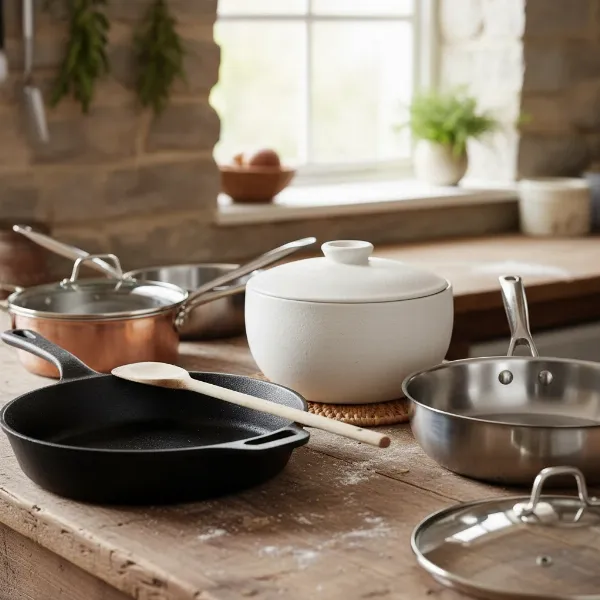 Assortment of safe cookware materials like ceramic, stainless steel, and cast iron on a kitchen counter
Comparison: Key Features of Safe Cookware
Choosing the right safety-focused cookware involves more than just material; it’s about understanding how each option performs across various attributes critical to daily cooking. Here’s a comparison of key features across popular safe cookware materials:
| Feature | 100% Pure Ceramic | High-Quality Stainless Steel (18/10) | Enameled Cast Iron | Hard-Anodized Aluminum |
|---|---|---|---|---|
| Safety | 100% non-toxic, metal-free, no leaching | Non-reactive, no toxic leaching (check nickel if sensitive) | Chemical-free enamel, non-reactive | Non-reactive surface, no aluminum leaching |
| Durability | Very durable, scratch- and stain-resistant, but can chip/crack if dropped | Highly durable, corrosion-resistant, robust | Extremely durable, chip-resistant enamel | Extremely durable, scratch-resistant surface |
| Heat Retention | Excellent, takes time to heat | Good, even heating with multi-ply construction | Excellent, slow to heat but retains heat well | Good, excellent heat conductivity |
| Heat Distribution | Very even once heated | Excellent, especially with aluminum/copper core | Excellent, very even | Excellent, rapid and even |
| Non-stick Properties | Naturally non-stick with proper care, good release | Requires fat, can be non-stick with proper technique | Naturally non-stick with seasoning (raw), enamel is naturally smoother | Often has a durable non-stick coating |
| Maintenance | Easy to clean, often dishwasher safe | Easy to clean, often dishwasher safe | Easy to clean, no seasoning needed | Easy to clean, usually hand wash for longevity |
| Weight | Heavier | Moderate | Very heavy | Lighter than cast iron, heavier than regular aluminum |
| Oven Safe | Yes, often to very high temperatures | Yes, typically up to 500-550°F | Yes, typically up to 500°F | Yes, usually up to 450-500°F (check manufacturer) |
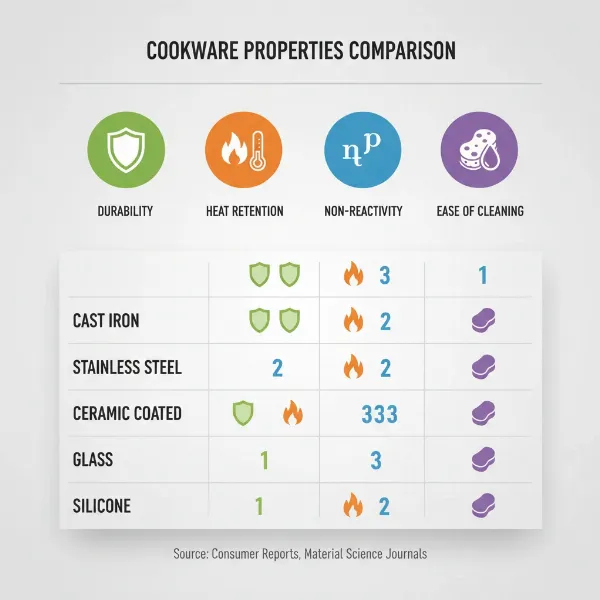 Infographic comparing features of safe cookware materials with icons for durability and heat
Selecting Your Ideal Safety-Focused Cookware
Choosing the right cookware for your home is a significant investment in your health and cooking enjoyment. With so many options available, a thoughtful approach ensures you find pieces that align perfectly with your lifestyle and culinary ambitions.
First, assess your cooking needs and household size. Do you cook for one or a large family? What types of meals do you prepare most often—quick weeknight dinners or elaborate weekend feasts? This will determine the quantity and types of pots and pans you need. For instance, a family might benefit from a versatile set including various sizes of saucepans, skillets, and a stockpot, while a single person might only need a few essential pieces.
Next, prioritize materials that explicitly state “free from” harmful chemicals. Look for labels confirming the absence of PFAS, PFOA, PTFE, lead, and cadmium. This is a non-negotiable step for truly safety-focused cookware. Always opt for pure, certified materials where possible.
Consider the design and functional features of the cookware.
- Bottom Type: Look for multi-ply bases, especially for stainless steel, which distribute heat more evenly and prevent scorching.
- Handles: Ensure they are securely riveted, comfortable to grip, and remain cool to the touch during stovetop cooking. Materials like stainless steel or heat-resistant silicone are often preferred for handles.
- Lids: Tight-fitting lids are essential for retaining moisture, flavors, and nutrients. Tempered glass lids offer the convenience of monitoring food without lifting, while solid metal lids provide superior heat retention.
- Oven Compatibility: If you plan to finish dishes in the oven, check the maximum oven-safe temperature for both the pot and its lid.
Finally, examine certifications and warranties. Reputable brands often provide third-party certifications attesting to their non-toxic claims. A robust warranty, such as a 10-year or even lifetime guarantee, indicates a manufacturer’s confidence in their product’s durability and quality, offering you long-term assurance. Making a smart choice now will enhance your cooking experience and contribute to a healthier kitchen for years to come.
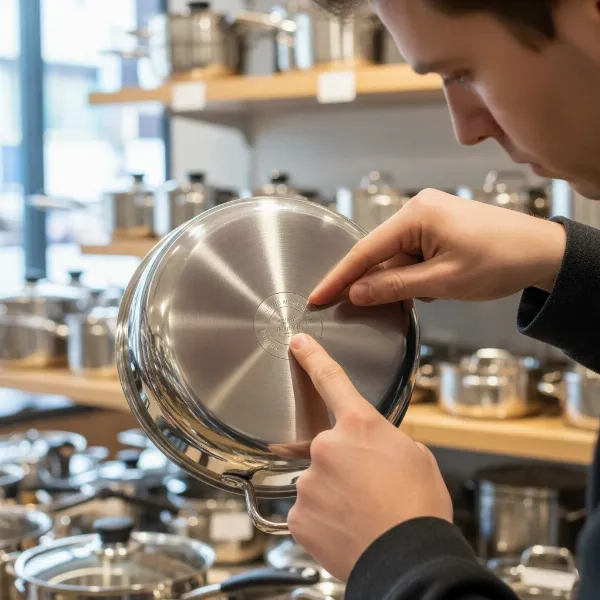 Person examining details of a cookware set in a store, focusing on labels and quality
Leading Materials in Safety-Focused Cookware
While no single brand can claim exclusivity on safety, certain materials consistently emerge as superior choices for health-conscious cooks. These materials offer diverse benefits, catering to different culinary preferences while upholding the highest standards of safety.
1. Pure Ceramic Cookware:
Pure ceramic cookware, made from 100% natural clay and fired at high temperatures, is an excellent choice for those seeking absolute non-toxicity. It is entirely free of metals, PFAS, PFOA, PTFE, lead, and cadmium. These pieces are highly non-reactive, ensuring no chemicals leach into your food. They excel in heat retention, making them ideal for slow cooking and stews. While they can be heavier and might require a bit more careful handling to prevent chipping, their smooth, non-stick-like surface is easy to clean and often boasts impressive durability against scratches and stains. Brands like Xtrema are well-regarded in this category, known for their commitment to pure ceramic products that are safe across almost all heat sources, including the microwave and oven.
2. High-Grade Stainless Steel:
Stainless steel remains a cornerstone of professional and home kitchens due to its resilience and hygienic properties. For safety, look for 18/8 or 18/10 food-grade stainless steel. This composition ensures corrosion resistance and prevents metal leaching into your food, even with acidic ingredients. Many high-quality stainless steel sets feature multi-clad construction, sandwiching an aluminum or copper core between layers of stainless steel to provide rapid and even heat distribution. This design enhances cooking performance while maintaining a non-reactive cooking surface. Brands like Cuisinart’s Multiclad Pro are examples of sets that deliver superior performance without off-gassing or leaching toxic chemicals, making them a safe and robust investment for any kitchen.
3. Enameled Cast Iron:
Enameled cast iron offers the unparalleled heat retention and even cooking of traditional cast iron, but with a significant advantage in maintenance and non-reactivity. The glass-like enamel coating is chemical-free, non-stick by nature, and prevents food from reacting with the iron, making it safe for all types of ingredients, including acidic ones. It eliminates the need for seasoning, common with raw cast iron, and is easier to clean. This material is particularly favored for braising, stewing, and baking, providing consistent results. The robust nature of enameled cast iron ensures longevity, often lasting for generations with proper care.
These materials represent the vanguard of safety-focused cookware, providing peace of mind without compromising on culinary performance.
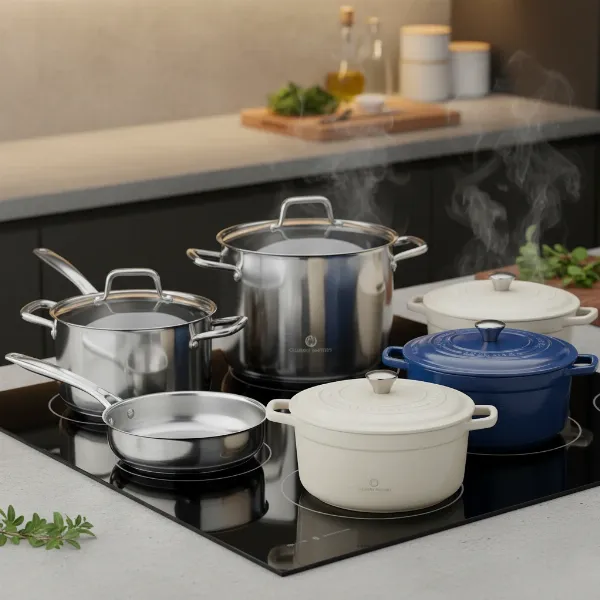 Elegant set of high-quality stainless steel or ceramic pots and pans on a stovetop
Caring for Your Safety-Focused Cookware
Proper care and maintenance are crucial for extending the lifespan and preserving the safety features of your cookware. Even the most durable, non-toxic materials benefit from mindful use and cleaning.
For Stainless Steel:
- Heat Management: Use medium to low heat settings. High heat can cause discoloration or warp the pans over time.
- Preventing Pitting: Add salt only after water has reached a boil. Adding salt to cold water in stainless steel can sometimes lead to tiny pits forming on the surface.
- Cleaning: While often dishwasher safe, hand washing with warm, soapy water and a soft sponge is recommended to maintain shine and prevent hard water spots. For stubborn food residue, soak the pan in hot soapy water or use a stainless steel cleaner. Avoid abrasive scrubbers that can scratch the surface.
For Pure Ceramic and Enameled Cast Iron:
- Temperature Control: These materials retain heat exceptionally well, so you often don’t need high heat. Start with medium-low and adjust as needed. Avoid sudden temperature changes (e.g., plunging a hot pan into cold water) to prevent thermal shock, which can lead to cracking.
- Utensils: Use wooden, silicone, or nylon utensils to protect the cooking surface from scratches. While some ceramic is scratch-resistant, it’s always best to be gentle.
- Cleaning: Hand wash with warm, soapy water and a soft cloth or sponge. The smooth surfaces typically make cleanup easy. For baked-on food, soak for a period before gently scrubbing. Avoid harsh detergents or abrasive pads.
For Hard-Anodized Aluminum:
- Heat Settings: Medium heat is usually sufficient. Overheating can damage the non-stick properties of some anodized coatings.
- Utensils: Use non-metal utensils to prevent scratching the anodized surface.
- Cleaning: Most manufacturers recommend hand washing with a mild detergent and soft sponge. Dishwashers can sometimes dull the finish over time.
General Tips for All Safety-Focused Cookware:
- Storage: Store cookware carefully to prevent scratching. Consider pan protectors or hanging pots and pans to avoid stacking directly.
- Preheating: Always preheat your pan properly before adding food. This helps achieve better cooking results and can enhance natural non-stick properties.
- Avoid Harsh Cleaners: Steer clear of steel wool, oven cleaners, or bleach, as these can damage the surface of any cookware material.
By following these simple guidelines, your safety-focused cookware will remain a reliable, healthy, and high-performing asset in your kitchen for many years.
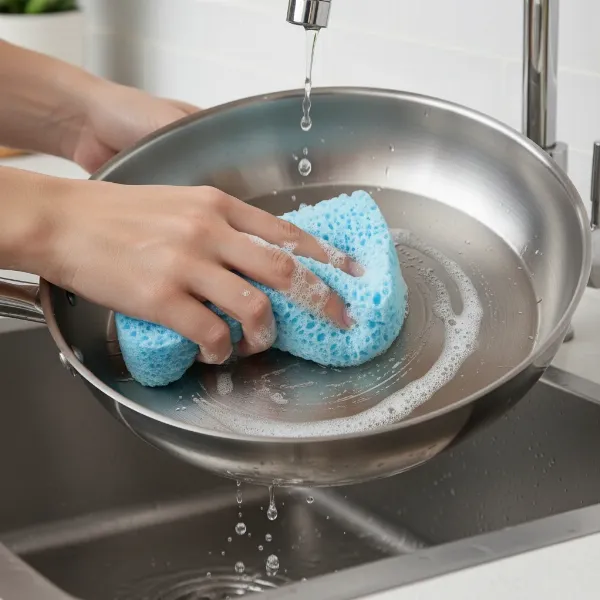 Hands gently cleaning a stainless steel pan with a soft sponge, illustrating proper care
Conclusion
Navigating the vast world of cookware can be daunting, but by prioritizing safety, you empower yourself to make choices that genuinely benefit your health and elevate your culinary experience. We’ve explored why selecting safety-focused cookware—free from harmful chemicals like PFAS, PFOA, and PTFE—is paramount, offering peace of mind in every meal. Understanding the unique attributes of materials such as pure ceramic, high-grade stainless steel, enameled cast iron, and hard-anodized aluminum equips you with the knowledge to choose the best fit for your kitchen.
Remember, an informed decision involves evaluating your specific cooking needs, meticulously checking for non-toxic certifications, and paying close attention to construction details like handles and lids. With proper care, these robust, health-conscious cookware options will serve you reliably for years, providing a foundation for delicious, worry-free cooking. Embrace the journey toward a healthier kitchen, one thoughtful cookware choice at a time. What will be the next safety-focused addition to your culinary arsenal?
Frequently Asked Questions
What makes cookware “non-toxic” or “safety-focused”?
Table is empty.“Non-toxic” cookware is made from materials that do not leach harmful chemicals or heavy metals into food, even when exposed to high temperatures. This typically means it is free from substances like PFAS, PFOA, PTFE, lead, and cadmium, which can be found in some traditional non-stick coatings and glazes.
Is stainless steel cookware truly safe?
Yes, high-quality stainless steel, particularly grades 18/8 or 18/10, is considered very safe. It is non-reactive and corrosion-resistant, meaning it won’t leach significant amounts of metals into your food. Those with severe nickel allergies might consider 18/0 (403 grade) stainless steel to minimize nickel exposure.
Can ceramic cookware be non-stick without harmful chemicals?
Yes, pure ceramic cookware (100% ceramic, not just ceramic-coated over metal) is naturally non-reactive and can offer a good food release, especially when properly preheated. Ceramic-coated options can also be non-stick while being PFAS and PFOA-free, but always verify the specific “free from” claims.
What are “forever chemicals” and why should I avoid them in cookware?
“Forever chemicals” refer to PFAS (per- and polyfluoroalkyl substances), including PFOA and PFOS. These are synthetic chemicals used in many conventional non-stick coatings. They are highly persistent in the environment and human body, and studies suggest potential links to various health issues, making their avoidance in cookware a health-conscious choice.
How can I verify if cookware is genuinely safety-focused?
Look for explicit “free from” labels (e.g., “PFOA-free,” “PFAS-free,” “lead-free”), third-party certifications, and transparent material descriptions (e.g., “100% pure ceramic,” “18/10 stainless steel”). Reputable brands will openly share their material composition and safety assurances.