Choosing the right cookware is fundamental to culinary success, whether you’re a seasoned chef or a home cooking enthusiast. The construction of a pot or pan significantly influences its performance, particularly how it heats and cooks food. Two primary methods dominate the market for multi-layered stainless steel cookware: impact bonded and fully clad. Understanding the differences between these construction techniques is key to selecting pieces that align with your cooking style, budget, and culinary aspirations. This guide will delve into the intricacies of each method, helping you make an informed decision for your kitchen.
Why Cookware Construction Matters
Table is empty.At its core, great cooking relies on effective heat management. Materials like aluminum and copper are excellent heat conductors, spreading warmth quickly and evenly. Stainless steel, while durable, non-reactive, and aesthetically pleasing, is a relatively poor conductor of heat on its own. This disparity is why cookware manufacturers combine these metals. The way these different metals are integrated into a pot or pan’s structure directly impacts its ability to distribute heat, prevent hot spots, and respond to temperature changes, ultimately affecting the quality and consistency of your cooking.
Understanding Impact Bonded Cookware
Impact bonded cookware is characterized by a thick disc of a heat-conductive material, typically aluminum or copper, fused to the exterior bottom of a stainless steel vessel. This process, often involving high-pressure impact, securely attaches the disc to the pan’s base. The primary goal of impact bonding is to enhance heat distribution at the bottom of the pan, making it more efficient than a single layer of stainless steel.
Advantages of Impact Bonded Cookware:
- Affordability: Generally, impact bonded cookware is less expensive to produce, making it a more budget-friendly option for consumers.
- Lighter Weight: Since the conductive layer is only at the base, these pans tend to be lighter than their fully clad counterparts, which can be advantageous for handling large pots.
- Suitable for Specific Tasks: This construction is often sufficient for tasks where heat primarily needs to come from the base, such as boiling water, simmering soups, or cooking dishes with high liquid content.
- Induction Compatibility: If the outer layer of the base includes magnetic stainless steel, impact bonded cookware can be induction compatible.
Disadvantages of Impact Bonded Cookware:
- Uneven Heat Distribution: The most significant drawback is that heat is concentrated at the bottom of the pan and does not extend effectively up the sidewalls. This can lead to uneven cooking, where food at the bottom might overcook while food on the sides remains undercooked.
- Potential for Delamination: Over time, especially with exposure to extreme temperature changes (e.g., high heat followed by cold water), the bonded disc can sometimes separate from the main pan body.
- Hot Spots: While better than single-ply stainless steel, impact bonding can still result in hot spots on the cooking surface due to less uniform heat spread compared to fully clad options.
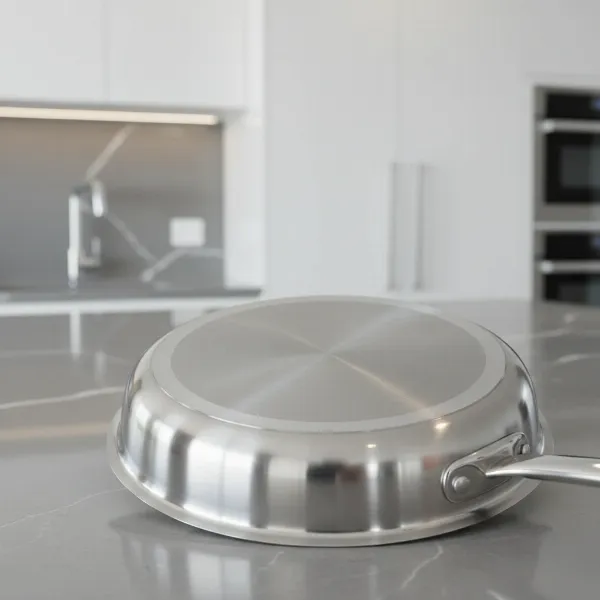 Close-up of an impact bonded cookware base, showing a thick aluminum disc fused to the bottom of a stainless steel pan, against a kitchen background.
Understanding Fully Clad Cookware (Tri-ply/Multi-ply)
Fully clad cookware, often referred to as tri-ply, 5-ply, or multi-ply, represents a more advanced construction method. In this design, multiple layers of different metals are permanently bonded together, extending not just across the bottom but up the entire sides of the cooking vessel, right to the rim. This “sandwich” construction typically involves a core of aluminum or copper nestled between layers of stainless steel.
Types of Cladding:
- Tri-Ply (3-Ply): The most common type, consisting of an aluminum core sandwiched between two layers of stainless steel. This provides excellent heat conduction and durability.
- 5-Ply: Features five alternating layers, often including multiple aluminum or copper layers for enhanced heat control, responsiveness, and retention. This thicker construction minimizes hot spots even further.
- 7-Ply and Beyond: Some premium brands offer even more layers, aiming for the ultimate in cooking precision and thermal stability, though the benefits become incremental beyond 5-ply for most home cooks.
Advantages of Fully Clad Cookware:
- Superior Heat Distribution: The full cladding ensures heat is distributed incredibly evenly across the entire cooking surface, including the sidewalls. This eliminates hot spots and promotes consistent cooking results.
- Excellent Heat Control and Responsiveness: The continuous layers allow for precise control over temperature changes, as the pan heats up and cools down more uniformly. This is crucial for delicate sauces and searing.
- Versatility: Ideal for a wide range of cooking techniques, from searing and sautéing to simmering and slow cooking, as heat radiates consistently from all sides.
- Durability and Longevity: The robust, bonded construction is highly resistant to warping and less prone to delamination, making fully clad cookware a long-term investment.
- Professional Performance: Many professional chefs prefer fully clad cookware due to its consistent performance and reliability in demanding kitchen environments.
Disadvantages of Fully Clad Cookware:
- Higher Cost: The complex manufacturing process and the use of more conductive metals throughout the entire pan make fully clad cookware significantly more expensive.
- Heavier Weight: The extended layers of metal make these pans noticeably heavier, which can be a consideration for some users, especially with larger pieces.
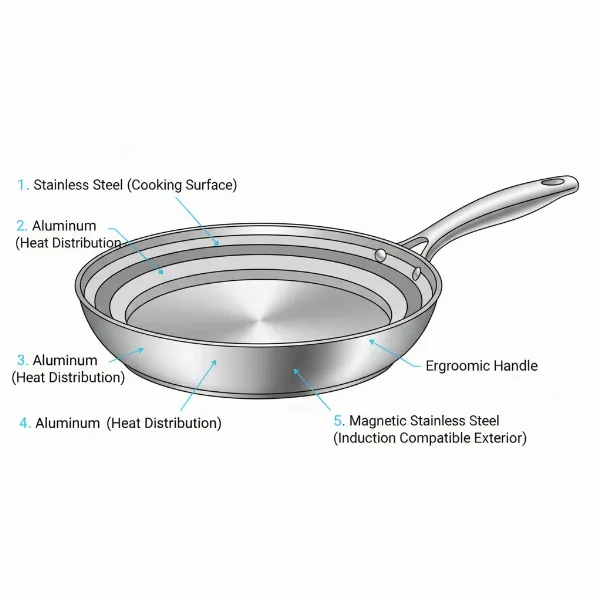 Cross-section illustration of fully clad cookware, showing multiple layers of stainless steel and aluminum extending from the base to the rim.
Impact Bonded vs. Fully Clad: A Side-by-Side Comparison
| Feature | Impact Bonded Cookware | Fully Clad Cookware (Tri-ply/Multi-ply) |
|---|---|---|
| Construction | Conductive disc fused to the bottom only. | Multiple layers bonded throughout the entire pan (base & sides). |
| Heat Distribution | Primarily at the base; can have hot spots and cooler sides. | Evenly distributed across the entire pan, including sidewalls. |
| Heat Control | Less responsive to temperature changes, less precise. | Highly responsive, offering superior temperature control. |
| Durability | Good, but risk of delamination over time. | Excellent; highly resistant to warping and delamination. |
| Price | More affordable. | Higher investment. |
| Weight | Lighter. | Heavier. |
| Best Use Cases | Boiling, simmering liquids, basic cooking. | Searing, frying, sautéing, delicate sauces, slow cooking, overall versatile. |
| Induction Comp. | Possible if the base includes a magnetic layer. | Generally compatible if outer layers are magnetic stainless steel. |
Choosing the Right Cookware for Your Kitchen
Deciding between impact bonded and fully clad cookware ultimately comes down to your personal cooking habits, priorities, and budget.
- Consider Your Cooking Style: If you primarily cook simple meals, boil pasta, or prepare liquid-based dishes, impact bonded cookware might suffice. However, if you enjoy searing meats, making delicate sauces, or need precise temperature control for complex recipes, fully clad cookware will deliver significantly better results.
- Evaluate Your Budget: Fully clad cookware represents a more significant initial investment. If budget is a primary concern, impact bonded options can offer a functional entry point into multi-layered stainless steel.
- Think About Durability: For a long-term investment that will withstand years of rigorous use and maintain consistent performance, fully clad is the superior choice.
- Cooktop Compatibility: Both types can be induction compatible, but always check product specifications.
> “The choice between impact bonded and fully clad isn’t just about price; it’s about understanding how you cook and what you demand from your tools. For uniform results and true culinary precision, full cladding is often the uncontested winner.” – ReviewHT Admin, Cookware Specialist
Maintenance Tips for Bonded Cookware
Regardless of the construction type, proper care can extend the life and performance of your cookware:
- Avoid Extreme Temperature Changes: Do not plunge a hot pan into cold water, as this thermal shock can stress the bonded layers and potentially lead to warping or, in impact bonded pans, delamination.
- Clean Promptly: Wash pans after use, using warm soapy water and a soft sponge. For stubborn stains, a stainless steel cleaner or a paste of baking soda and water can be effective.
- Store Carefully: Prevent scratches by placing soft cloths between stacked pans.
- Heat Gradually: Allow pans to heat up gradually on the stovetop to ensure even heat distribution and prevent overheating one spot.
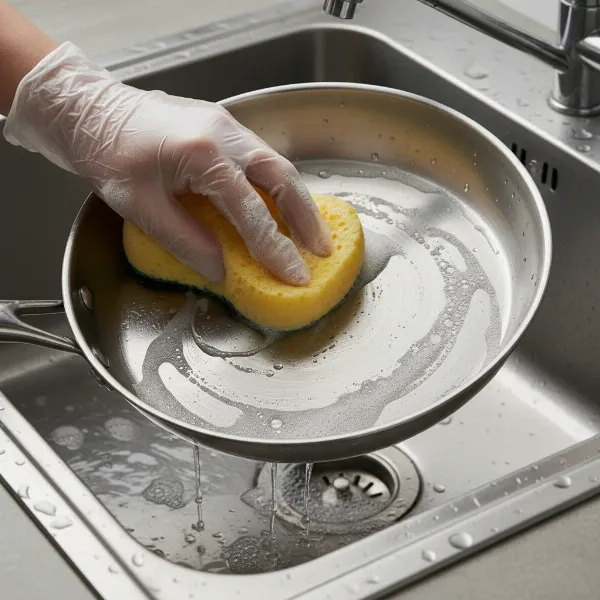 A hand cleaning a stainless steel pan with a soft sponge and soapy water, illustrating maintenance tips.
Conclusion
The distinction between impact bonded and fully clad cookware lies in the extent and method of layering different metals to optimize heat performance. While impact bonded offers an economical solution for basic cooking tasks by enhancing heat at the base, fully clad construction elevates the cooking experience with unparalleled heat distribution, control, and durability across the entire pan. Your decision should be guided by your cooking needs, the type of dishes you frequently prepare, and your investment in kitchen longevity. Opting for fully clad cookware often translates to a more versatile and reliable cooking companion, capable of handling a wider array of culinary challenges with consistent, professional-level results. Which construction method will empower your next culinary masterpiece?
Frequently Asked Questions
Is fully clad cookware worth the investment?
Yes, fully clad cookware is generally considered worth the investment for those who cook frequently and desire superior performance. Its even heat distribution, precise temperature control, and enhanced durability lead to better cooking results and a longer lifespan, justifying the higher cost over time.
Can impact bonded cookware be used on induction cooktops?
Yes, impact bonded cookware can be used on induction cooktops, provided that the outermost layer of the bonded base is made from a magnetic material, typically ferritic stainless steel. Always check the product specifications for induction compatibility.
What is the best ply for clad cookware?
The “best” ply depends on your preference. Tri-ply (3-ply) offers a good balance of performance and price for most home cooks. 5-ply construction provides even greater heat control and responsiveness, preferred by many serious cooks for its superior thermal stability. Higher ply counts offer incremental benefits but also increased weight and cost.
How can I tell if cookware is fully clad or impact bonded?
You can often tell by looking at the pan’s construction. If the metal layers are visible only at the bottom and create a distinct “disc” at the base, it’s likely impact bonded. Fully clad cookware will show a continuous, uniform thickness from the bottom all the way up the sidewalls to the rim.