Imagine transforming those savory, caramelized bits stuck to the bottom of your pan into a rich, flavorful sauce that elevates any dish. This isn’t magic; it’s the art of deglazing, a fundamental cooking technique employed by chefs worldwide. It’s the secret weapon for turning ordinary drippings into extraordinary culinary creations, not only enhancing taste but also simplifying cleanup. This guide will walk you through the essential steps, tools, and liquids needed to master deglazing, ensuring your pan sauces are consistently perfect.
The Magic of Deglazing: Why It Transforms Your Cooking
At the heart of deglazing is “fond,” a French term referring to the deeply caramelized, flavorful food particles that stick to the bottom of a pan after searing or roasting meats and vegetables. These brown bits are concentrated pockets of deliciousness, packed with sugars and proteins that have undergone the Maillard reaction, creating complex, savory notes. When you deglaze, you dissolve these precious morsels into a liquid, capturing and intensifying their flavor to form the base of an incredible sauce. Beyond its culinary contributions, deglazing also makes cleaning your pan significantly easier, as those stubborn, stuck-on bits simply melt away into your sauce. It’s a win-win technique that adds depth and sophistication to your home cooking with minimal effort.
Essential Tools and Liquids for Successful Deglazing
To embark on your deglazing journey, having the right equipment and choosing the appropriate liquid are crucial. The pan itself plays a starring role.
Pan Power
Table is empty.Stainless steel and cast iron pans are your best friends for deglazing. Their surfaces allow for the formation of excellent fond, which is key to a flavorful sauce. Conversely, non-stick pans are generally unsuitable because their slippery surface prevents fond from adhering, robbing you of the flavorful bits needed for deglazing.
The Right Scraper
A sturdy wooden spoon or a heat-resistant silicone spatula with a flat edge is ideal for scraping the bottom of the pan. These tools are effective at dislodging the fond without damaging your pan’s surface.
Liquid Choices
The liquid you choose profoundly impacts your sauce’s final flavor profile. Aim for about 1/4 to 1/2 cup of liquid for a standard pan.
- Alcoholic Options: Wine (red for beef, white for chicken or fish), beer, or even spirits like brandy or sherry add complex layers of flavor. The alcohol cooks off, leaving behind only the essence.
- Non-Alcoholic Choices: Chicken, beef, or vegetable broth/stock are versatile and excellent. Vinegar (red wine, balsamic, or apple cider) introduces a pleasant tang and acidity. Fruit juices like apple, grape, or cranberry can offer a sweet-tart dimension, especially with pork or poultry.
- Avoid Plain Water: While it will loosen the fond, plain water won’t contribute any additional flavor, resulting in a less robust sauce.
Step-by-Step Guide: How to Deglaze Your Pan Like a Pro
Mastering deglazing is simpler than you might think. Follow these steps for consistently delicious pan sauces:
-
Prep the Pan: Once your meat or vegetables are cooked, transfer them from the pan to a plate. Carefully pour off any excessive fat, leaving just a thin layer. Crucially, if you see any blackened (truly burnt, not just dark brown) bits, remove them, as these can impart a bitter taste to your sauce. The desirable bits are golden-brown and firmly attached.
-
Heat It Up: Place the pan back on the stovetop over medium-high heat. Allow it to get hot, but not smoking. A hot pan is essential for the liquid to sizzle and immediately begin loosening the fond.
-
Pour in the Liquid: Add your chosen deglazing liquid (around 1/4 to 1/2 cup). It should sizzle vigorously upon contact. The steam and heat will work to soften the fond.
-
Scrape Away the Flavor: Immediately after adding the liquid, use your wooden spoon or spatula to vigorously scrape across the entire bottom of the pan. Work diligently to loosen all the caramelized bits, ensuring they dissolve into the liquid. This is where the magic happens!
-
Simmer and Reduce: Bring the liquid to a boil, then reduce the heat to a simmer. Let the liquid cook down, or “reduce,” by about half its volume. This process concentrates the flavors, creating a richer, more intense sauce. This typically takes 1 to 3 minutes, depending on the amount of liquid.
-
Refine Your Sauce: At this stage, you have a flavorful base. You can enhance it further by whisking in a pat of cold butter for a glossy, velvety texture, or a splash of cream for richness. Sautéing finely minced shallots or garlic in the pan before adding the liquid can also add incredible aromatic depth. Taste and adjust the seasoning with salt, pepper, or a touch of lemon juice or vinegar for brightness.
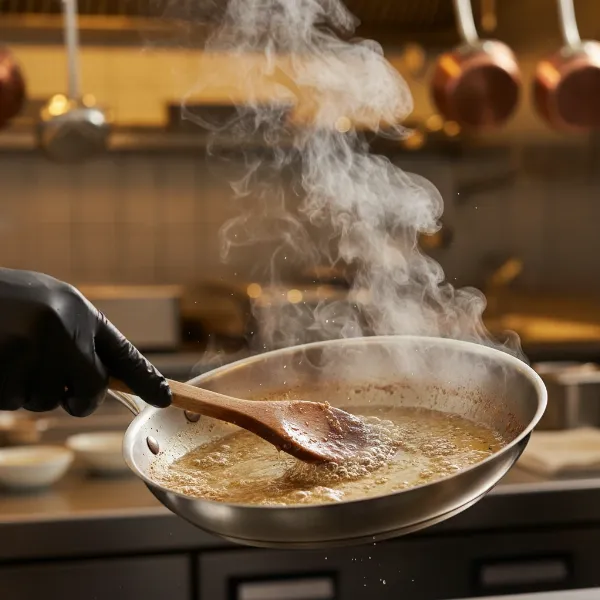 A chef demonstrating the deglazing technique in a stainless steel pan, scraping fond with a wooden spoon as liquid sizzles, emphasizing the creation of a perfect pan sauce.
Elevating Your Pan Sauces: Tips and Tricks
Deglazing is just the first step; refining your pan sauce can take it from good to truly extraordinary. Consider these expert tips:
-
Aromatics First: For an extra layer of flavor, sauté finely minced shallots, garlic, or other aromatics in the pan after removing the main ingredient and before adding the deglazing liquid. Cook them briefly until fragrant, then proceed with deglazing.
-
Emulsification for Richness: A common chef’s trick is to whisk in a tablespoon or two of cold butter, off the heat, at the very end. The cold butter will emulsify into the reduced liquid, creating a wonderfully smooth, glossy, and rich sauce without making it greasy.
-
Thickening Agents (When Needed): Most pan sauces thicken naturally through reduction. However, if you desire a thicker consistency, you can whisk in a cornstarch slurry (equal parts cornstarch and cold water) or a small amount of flour (cooked briefly to remove raw taste) after deglazing and reduction. Add gradually until desired thickness is reached.
-
Seasoning to Perfection: Always taste and adjust. A good pan sauce needs balanced seasoning. Don’t be afraid to add a pinch more salt or pepper, or a squeeze of lemon juice or a dash of vinegar to brighten the flavors and cut through richness.
-
Straining (Optional): For an impeccably smooth and refined sauce, you can strain the finished sauce through a fine-mesh sieve. This removes any small food particles, creating a professional texture.
Common Deglazing Mistakes to Avoid
Even a simple technique like deglazing has pitfalls. Being aware of these common errors will help you achieve consistent success:
-
Not Removing Excess Fat: Too much fat can prevent the deglazing liquid from properly interacting with the fond, resulting in a greasy, less flavorful sauce. Drain excess fat, leaving just a thin layer.
-
Trying to Deglaze Burnt Bits: Blackened, truly burnt fond will impart a bitter, unpleasant taste to your sauce. If your fond is black, it’s best to discard it, clean the pan, and start over or simply make a different sauce.
-
Using a Non-Stick Pan: As mentioned, non-stick surfaces don’t allow fond to form properly. For the best pan sauces, always use stainless steel or cast iron.
-
Not Scraping Thoroughly Enough: The entire point of deglazing is to release those flavorful bits. If you don’t scrape vigorously and evenly, you’ll leave flavor behind.
-
Using Too Much or Too Little Liquid: Too much liquid will dilute the flavor and require a longer reduction time, risking over-reduction. Too little liquid might not adequately cover and loosen all the fond. Stick to the 1/4 to 1/2 cup guideline.
-
Forgetting to Reduce: Reduction is crucial for concentrating the flavors. Skipping this step will result in a thin, watery sauce lacking depth.
“Deglazing isn’t just about cleaning your pan; it’s about unlocking a deep, concentrated flavor that would otherwise go to waste. It’s truly where the magic of a great pan sauce begins.” – Chef Antoine Dubois, Culinary Instructor
Frequently Asked Questions
What exactly is “fond”?
Fond refers to the flavorful, caramelized bits of food (sugars, proteins, amino acids) that stick to the bottom of a cooking pan after searing or roasting. These brown, savory fragments are packed with concentrated flavor, ready to be dissolved into a sauce.
Can I deglaze with just water?
While water will technically loosen the fond, it won’t add any additional flavor to your sauce. For a truly rich and flavorful pan sauce, it’s always recommended to use a liquid with its own distinct taste, such as wine, broth, stock, or vinegar.
How do I know if my fond is burnt and not just caramelized?
Caramelized fond will be golden to dark brown and will scrape off relatively easily once liquid is added. Burnt fond, on the other hand, will be black, hard, and may smell acrid. If it’s truly burnt, it’s best to remove it before deglazing to prevent a bitter sauce.
What’s the best liquid for a beginner to use for deglazing?
For beginners, chicken or vegetable broth/stock is an excellent choice. It’s universally appealing, adds good flavor without being overpowering, and doesn’t involve alcohol, making it a safe and easy starting point for mastering the technique.
Can I deglaze any pan, including non-stick ones?
Deglazing is most effective and flavorful in pans that allow fond to develop, such as stainless steel or cast iron. Non-stick pans are designed to prevent food from sticking, which means little to no fond will form, making them unsuitable for traditional deglazing.
Conclusion
Deglazing is a simple yet powerful technique that can dramatically elevate your home cooking, transforming leftover pan drippings into succulent, restaurant-quality sauces. By understanding the role of fond, selecting the right liquids, and following a few straightforward steps, you unlock a world of concentrated flavor. Don’t let those precious brown bits go to waste; embrace the art of deglazing and watch your culinary creations soar. With practice, you’ll instinctively know when and how to deglaze, adding a sophisticated touch to nearly any meal. What culinary masterpiece will you create with your next perfect pan sauce?