Choosing the right lid for your pot or pan might seem like a minor detail, but it profoundly impacts your cooking results. Every home chef, from novice to seasoned pro, understands that a lid is more than just a cover; it’s a crucial tool for regulating temperature, retaining moisture, and locking in flavors. When you stand before your cookware collection, pondering between a transparent glass lid and a classic stainless steel one, you’re not just picking a material – you’re defining your cooking experience. This guide will delve deep into the world of pot lids, dissecting the strengths and weaknesses of both glass and stainless steel options, helping you make an informed decision that perfectly complements your culinary style.
The Ultimate Showdown: Understanding Your Pot Lid Options
Pot lids are silent workhorses in the kitchen, affecting everything from energy efficiency to the texture of your final dish. They prevent spills, reduce cooking times, and ensure even heat distribution. But the material of your lid dictates how effectively it performs these tasks. Let’s explore the distinct characteristics of glass and stainless steel lids to illuminate which might be the superior choice for your unique cooking repertoire.
Embracing Transparency: The Allure of Glass Lids
Table is empty.Glass lids have become a staple in modern kitchens, celebrated for their aesthetic appeal and practical benefits. Often made from tempered glass, these lids offer a unique advantage that can transform how you interact with your cooking.
Advantages of Glass Lids
The primary allure of glass lids lies in their transparency. Imagine simmering a vibrant curry or delicate custard; with a glass lid, you can effortlessly monitor the cooking process without ever needing to lift the cover. This visual oversight helps prevent boil-overs, ensures precise timing for delicate dishes, and keeps crucial heat and moisture locked inside the pot. Beyond practicality, glass lids offer a sleek, contemporary look that can elevate your kitchen’s style and even make for an elegant serving presentation directly from the pot to the table. They are also generally straightforward to clean, with many being dishwasher-safe, and their smooth surface resists scratches, maintaining clarity over time.
Disadvantages of Glass Lids
While visibility is a major plus, glass lids do come with their drawbacks. Their most significant disadvantage is their fragility. Tempered glass is stronger than ordinary glass, but it remains susceptible to shattering or cracking if dropped or exposed to sudden, extreme temperature changes. This vulnerability makes them a less durable option for busy kitchens or households with young children. In terms of heat retention, glass lids are moderate performers; while they help trap heat, many feature steam vents that can lead to some heat loss. Furthermore, their oven-safe temperature limits are typically lower than stainless steel, often capping around 350-400°F (180-200°C). Lastly, while easy to clean, their transparency means they readily show fingerprints, oil smudges, and condensation, demanding more frequent wiping to maintain their pristine appearance.
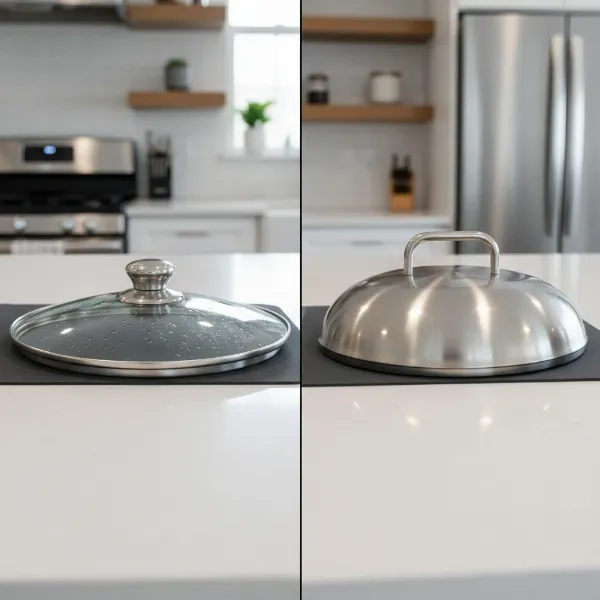 Comparing glass and stainless steel pot lids on a kitchen counter
The Robust Choice: Discovering Stainless Steel Lids
Stainless steel lids are the quintessential workhorses of the kitchen, renowned for their enduring strength and classic, no-nonsense appeal. They embody reliability, making them a preferred choice for many home cooks and professional chefs alike.
Advantages of Stainless Steel Lids
When it comes to durability, stainless steel lids are in a league of their own. They are incredibly robust, resisting dents, scratches, and warping even under heavy daily use. This resilience makes them a long-term investment that can withstand accidental drops and the rigors of a bustling kitchen. Beyond their toughness, stainless steel lids are exceptional at heat retention and distribution. They create a more sealed chamber, efficiently trapping steam and heat to ensure uniform cooking. This characteristic is particularly beneficial for dishes requiring long simmering, like hearty stews, dals, or biryanis, where consistent temperature and moisture are key to flavor development. Their superior heat tolerance also makes them highly versatile for oven use, capable of enduring much higher temperatures than most glass lids. For households prioritizing safety, the reduced risk of breakage compared to glass offers significant peace of mind. Cleaning is also a breeze; stainless steel resists stains, doesn’t cloud over time, and maintains its polished finish with minimal effort.
Disadvantages of Stainless Steel Lids
The primary trade-off with stainless steel lids is the lack of visibility. Without a transparent surface, you cannot monitor your food’s progress without lifting the lid, which inevitably leads to a loss of heat and moisture. This can be less ideal for delicate dishes or those requiring constant observation. Another consideration is the cost; stainless steel lids generally have a higher upfront price tag compared to their glass counterparts, though their longevity often offsets this initial investment. While durable, lower-quality stainless steel can sometimes be prone to rust if not cared for properly, though high-quality options largely mitigate this concern. Finally, while their classic look appeals to many, they may not offer the same modern aesthetic or versatility for serving that transparent glass lids do.
Side-by-Side Comparison: Glass vs. Stainless Steel Lids
To help you navigate the choice between these two popular lid materials, here’s a detailed comparison of their key features and performance aspects.
| Feature | Glass Lids | Stainless Steel Lids |
|---|---|---|
| Visibility | High – see food without lifting the lid | None – must lift to check food |
| Durability | Moderate – prone to shattering if dropped/shocked | High – highly resistant to dents, scratches, and breakage |
| Heat Retention | Moderate – some heat loss through vents | Excellent – traps heat and steam efficiently |
| Oven Safety | Limited to medium temperatures (approx. 350-400°F / 180-200°C) | High – withstands higher oven temperatures |
| Cleaning | Easy, often dishwasher safe, but shows smudges/condensation | Easy, resists stains and maintains finish |
| Moisture Retention | Good, but vents can reduce moisture for long simmering | Excellent – seals in moisture for tender results |
| Safety | Risk of shattering if misused | Very safe, minimal risk of breakage |
| Aesthetic | Modern, allows food visibility, good for serving | Classic, industrial, professional look |
| Cost | Generally more affordable upfront | Higher upfront cost, but excellent longevity |
| Weight | Can be heavier (tempered glass) | Often lighter, but thick gauges add weight |
This table highlights the fundamental trade-offs. If visual monitoring is your top priority, glass leads the way. If unmatched durability and superior heat retention for long cooking durations are essential, stainless steel is the clear winner.
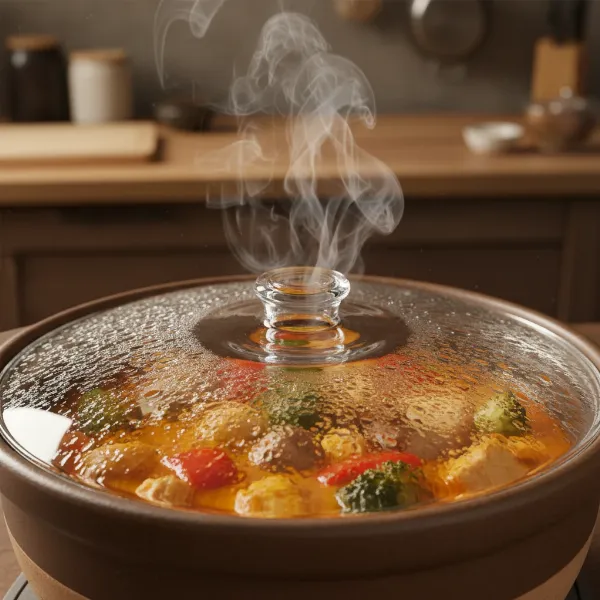 Glass pot lid showing food cooking inside
Choosing the Right Lid for Your Cooking Needs
Selecting the perfect pot lid is a decision that should align closely with your cooking habits, priorities, and the specific dishes you prepare most often. There isn’t a universally “better” option, as each material excels in different scenarios. By considering your lifestyle and culinary aspirations, you can pick the lid that truly enhances your time in the kitchen.
Factors to Consider
When making your choice, begin by assessing your typical cooking style. Do you frequently prepare delicate sauces, pasta, or dishes that can easily boil over? A glass lid’s transparency would be invaluable here, allowing you to react quickly without losing heat. On the other hand, if your kitchen is often a bustling hub, and you prioritize robust, heavy-duty cookware for braising meats or slow-cooking stews, the resilience of a stainless steel lid will be more beneficial.
Think about the types of cookware you own. Most high-quality pots and pans come with compatible lids, but if you’re buying replacement lids or expanding your collection, ensure the fit is snug to maximize efficiency. Your budget is also a practical consideration; glass lids typically offer a more budget-friendly entry point, while stainless steel often represents a greater initial investment, justified by its long-term durability. Finally, consider your kitchen aesthetics – do you prefer a sleek, modern look or a timeless, professional appeal?
Matching Lids to Specific Cooking Tasks
Different cooking methods truly benefit from specific lid characteristics. For tasks like boiling water for pasta, simmering quick sauces, or sautéing vegetables, a glass lid is excellent. Its transparency allows you to gauge readiness and prevent overcooking or spills without lifting, preserving precious heat. For example, boiling milk benefits greatly from the visibility a glass lid provides, allowing you to catch rising foam before it overflows.
Conversely, for slow-cooked dishes such as gravies, rich stews, or baking bread in a Dutch oven, stainless steel lids are unparalleled. Their superior heat and moisture retention create a sealed environment that tenderizes food and deepens flavors. The robust construction ensures they can handle prolonged high heat in the oven without warping or breaking, making them ideal for dishes that start on the stovetop and finish baking.
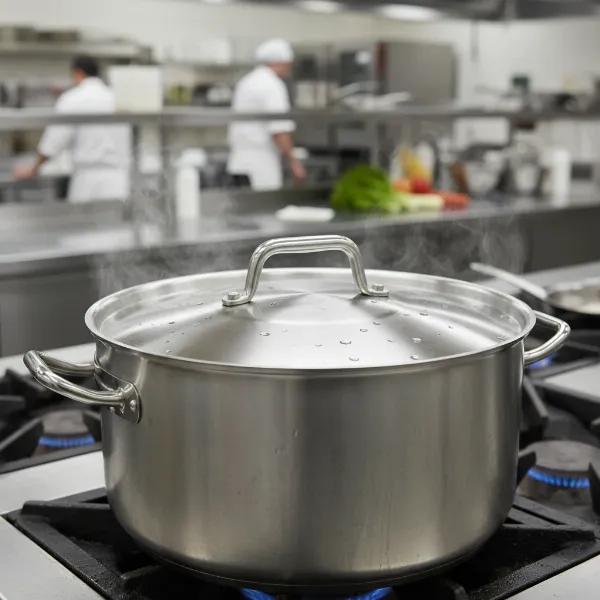 Durable stainless steel pot lid in a busy kitchen
Expert Insights on Lid Selection
The choice between a glass or stainless steel lid is often a personal one, influenced by individual cooking styles and preferences. However, a common recommendation from those with extensive kitchen experience is to embrace the versatility of having both.
“Having spent over a decade guiding countless home cooks, I’ve seen firsthand how the right lid can elevate a dish from good to exceptional. It’s not just about covering a pot; it’s about controlling your culinary environment. For quick checks and vibrant dishes, glass is a joy. But for those long, slow cooks where flavor development is paramount, a sturdy stainless steel lid is truly indispensable.” – Admin, ReviewHT, Cookware Expert
Many seasoned cooks keep a mix of both glass and stainless steel lids in their kitchens, strategically choosing the lid that best suits the task at hand. This balanced approach allows for the flexibility to handle everything from quick weeknight meals to elaborate holiday feasts with optimal results.
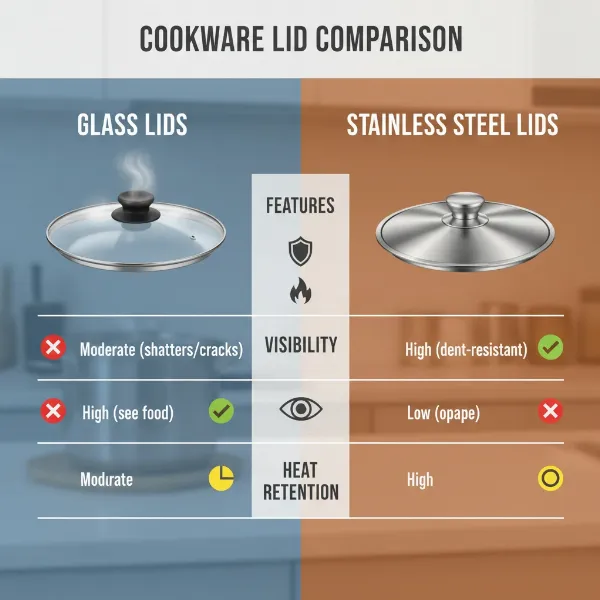 Detailed comparison table of pot lid features
Maintenance and Care for Your Pot Lids
Proper care is essential to extending the lifespan of both your glass and stainless steel pot lids. While both are generally easy to clean, understanding their specific needs can prevent damage and keep them looking their best.
Cleaning and Preserving Glass Lids
Glass lids, especially those made from tempered glass, are often dishwasher safe, simplifying your cleanup routine. For handwashing, use mild soap and a soft sponge to avoid scratches on the glass surface. The primary challenge with glass is maintaining its clarity, as it tends to show fingerprints, oil splatters, and condensation marks more readily than stainless steel. Regular wiping with a soft cloth after washing helps prevent water spots and keeps the lid sparkling.
A crucial point for glass lids is avoiding sudden temperature changes. Never plunge a hot glass lid into cold water, as this thermal shock can cause stress cracks or even shattering. Allow hot lids to cool gradually before washing. Regularly inspect the lid for any chips or cracks, particularly around the edges and handles. Replace damaged lids immediately, as compromised glass can be a safety hazard.
Maintaining Stainless Steel Lids
Stainless steel lids are celebrated for their low-maintenance nature and resistance to stains and corrosion. They can be cleaned with warm, soapy water and a soft cloth or sponge. For stubborn food residues, a non-abrasive scrubber can be used. Unlike glass, stainless steel typically doesn’t show smudges as prominently and resists clouding over time, maintaining its sleek finish for years.
To prevent water spots and maintain shine, it’s a good practice to dry stainless steel lids thoroughly immediately after washing. Occasional polishing with a specialized stainless steel cleaner can restore their original luster, especially if they’ve been exposed to hard water or strong detergents. While incredibly durable, it’s still advisable to avoid harsh abrasive cleaners or steel wool, which can scratch the surface. With minimal care, stainless steel lids will remain a reliable part of your cookware collection for a very long time.
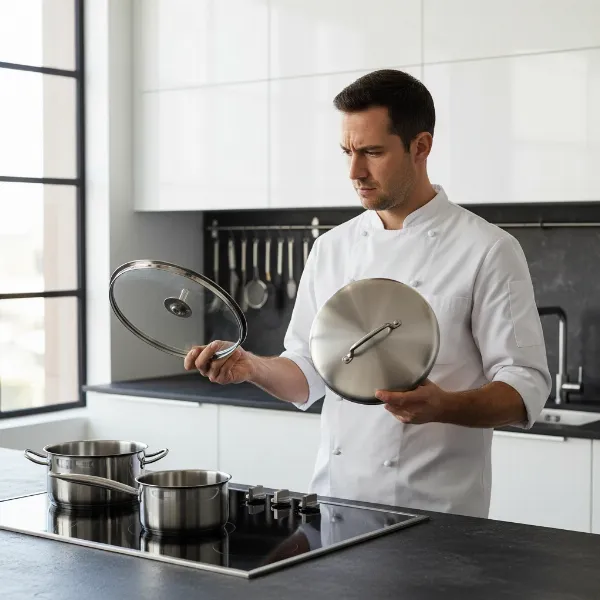 Chef choosing between glass and stainless steel lids
Conclusion
The choice between glass lids and stainless steel lids ultimately comes down to a balance of your personal cooking style, priorities, and what you value most in your kitchen tools. Glass lids offer unparalleled visibility, allowing you to monitor your culinary creations without lifting the lid, contributing to a modern aesthetic and making them ideal for delicate dishes and preventing boil-overs. However, they demand careful handling due to their fragility and have lower oven temperature limits.
Stainless steel lids, on the other hand, are the epitome of durability and robust performance. They excel at retaining heat and moisture, making them perfect for slow-cooked meals and high-temperature oven use, while requiring less maintenance. Their trade-off is the lack of transparency. Many experienced home cooks find the most effective strategy is to incorporate both types into their kitchen arsenal, leveraging the strengths of each for different cooking tasks. By understanding the distinct advantages and disadvantages of each, you are empowered to select the lids that will best serve your everyday cooking needs and contribute to countless delicious meals.
Which type of lid best complements your current cooking routine, and what features are non-negotiable for your kitchen?
Frequently Asked Questions
Is a glass lid safe to use in the oven?
Many glass lids, especially those made from tempered glass, are oven-safe, but typically only up to moderate temperatures, usually around 350-400°F (180-200°C). Always check the manufacturer’s specifications for the exact temperature limit, as exceeding it can cause the glass to crack or shatter.
Do stainless steel lids make food cook faster?
Stainless steel lids are superior at trapping and retaining heat and moisture due to their solid construction. This efficient insulation can lead to food cooking more evenly and potentially slightly faster, especially for dishes that require simmering or steaming, by maintaining a consistent internal temperature within the pot.
How do I prevent condensation build-up on glass lids?
Condensation is a natural occurrence with glass lids as steam cools upon contact with the cooler glass surface. Many glass lids incorporate a small steam vent to help regulate this. To minimize excessive build-up, ensure your heat setting isn’t too high, and consider using the lid’s vent if available.
What material is generally more expensive for pot lids?
Stainless steel lids typically have a higher upfront cost than glass lids. This is often due to the material’s inherent durability, resistance to warping, and superior heat retention properties. However, their longevity means they can be a more cost-effective investment over time.
Can I mix and match lid types with my cookware?
Absolutely. Many cooks choose to have a variety of lid types to suit different cooking needs. As long as the lid provides a snug, secure fit on your pot or pan, ensuring proper heat and moisture retention, you can mix and match materials to take advantage of both glass’s visibility and stainless steel’s durability.