Seeing your gleaming stainless steel pots and pans develop an unsightly rainbow sheen, a bluish tint, or even a stubborn brown stain after cooking can be frustrating. These discolorations, often a result of high heat usage, can make your otherwise durable cookware look old and worn. But fear not, this common kitchen dilemma is easily reversible with the right techniques and a few simple household ingredients. As a seasoned technician with over a decade of experience advising on cookware, I’m here to share trusted methods to bring back that brilliant shine to your stainless steel.
Why Does Stainless Steel Discolor with Heat?
The vibrant, often rainbow-like, discoloration you see on your stainless steel cookware is commonly known as “heat tint” or “heat dome.” It’s a natural phenomenon that occurs when the chromium in the stainless steel reacts with oxygen in the air at high temperatures. This reaction forms a thin, oxidized layer on the surface, which, depending on its thickness, reflects light in different ways, producing a spectrum of colors. This process typically begins when the steel reaches temperatures between 430°F to 600°F (220°C to 316°C), starting with a pale yellow and progressing to brown, purple, or even deep blue as temperatures increase.
While aesthetically displeasing, this heat tint is generally harmless and does not affect the performance or safety of your cookware. It’s not a sign of damage, but rather an indication that your pan has been exposed to significant heat. Understanding the cause is the first step toward effectively cleaning and preventing these marks.
Essential Cleaning Agents for Heat Discoloration
To combat heat discoloration, you don’t need harsh chemicals. Many effective solutions can be found right in your pantry.
- White Vinegar: This acidic staple is incredibly effective at dissolving the oxidized layer responsible for rainbow stains and light heat tints. It’s gentle yet powerful, breaking down the discoloration without damaging the steel.
- Baking Soda: A mild abrasive, baking soda works wonders when combined with water or other acidic agents. It helps to scrub away stubborn stains and provides a gentle polishing action.
- Cream of Tartar: Similar to baking soda, cream of tartar is a mild acid often used with water to create a paste for scrubbing away heat stains.
- Lemon Juice: The natural acidity of lemon juice makes it another excellent choice for tackling heat discoloration, often used in conjunction with baking soda.
- Bar Keepers Friend: For more persistent or embedded stains, a specialized commercial cleaner like Bar Keepers Friend is highly recommended. It contains oxalic acid, which effectively cuts through oxidation and grime.
Step-by-Step Guide: Cleaning Heat Discoloration
Before you begin, always ensure your stainless steel cookware has completely cooled to avoid warping or damage.
General Preparation: Cool Down and Clear Debris
|
Our Picks for the Best Stainless steel pot set in 2026
As an Amazon Associate I earn from qualifying purchases.
|
||
| Num | Product | Action |
|---|---|---|
| 1 | Cuisinart Chef’s Classic 11-Piece Stainless Steel Pots and Pans Set, Cookware Set Compatible with Induction, Electric, Gas Cooktops, Aluminum Core for Even Heat, Cool Grip Handles, Dishwasher Safe |

|
| 2 | Stainless Steel Cookware Set - 20 PCS Pots and Pans Set with 3-Ply Stainless Steel Frying Pan, Professional Kitchen Cooking Set, Induction Compatible, Oven & Dishwasher Safe |
|
| 3 | Cuisinart 12-Piece MultiClad Pro Triple Ply Stainless Stainless Steel Pots and Pans Set, Cookware Set Compatible with Induction, Electric, Gas Cooktops, Cool Grip Handles, Oven Safe to 500°F, Silver |
|
| 4 | Cuisinart 17-Piece Stainless Steel Cookware Set, Chef's Classic Steel Collection with Pure Aluminum Core for Quick and Even Heat, Cool Grip Handles, Dishwasher Safe, 77-17N |
|
| 5 | Cook N Home Kitchen Cookware Sets, 12-Piece Basic Stainless Steel Pots and Pans, Silver |
|
| 6 | MICHELANGELO Stainless Steel Saucepan Set with Lids 1QT & 2QT & 3QT, Stainless Steel Sauce Pot Set 6pcs, Induction Saucepans, Nonstick Sauce Pan Set, Dishwasher Safe |
|
| 7 | Mueller 17-Piece Stainless Steel Pots and Pans Set – Tri-Ply Ultra-Clad Pro Cookware Set, Induction Ready, Oven Safe, Even-Heat Aluminum Core, Includes Skillets, Saucepans, Dutch Oven, Stockpot |
|
| 8 | 3 Ply Stainless Steel 11-Piece Cookware Set with Lids, Pots and Pans Kitchen Set, Non-Toxic, Induction, Oven, Dishwasher Safe, Professional Chef Quality |
|
| 9 | Cuisinart 7-Piece Stainless Steel Pots and Pans Set, Cookware Set Compatible with Induction, Electric, Gas Cooktops, Aluminum Core for Quick Even Heat, Cool Grip Handles, Dishwasher Safe, Oven Safe |
|
| 10 | Hunnycook Stainless Steel Cookware Set - 15 Pieces Pots and Pans Set, Includes 6 Pots and Pans, 6 Lids and 3 Utensils, Fixed Handles, Induction Safe and Dishwasher Safe |
|
First, make sure the affected pot or pan is completely cool to the touch. Remove any food residue or loose debris with warm, soapy water and a soft sponge. This ensures that your cleaning efforts focus solely on the discoloration.
Method 1: The Vinegar Power Clean (for rainbow/light tints)
This method is particularly effective for the iridescent, rainbow-like stains.
- Apply Vinegar: Pour a small amount of undiluted white vinegar directly onto the discolored area. For lighter stains, you can dilute the vinegar slightly with water.
- Swirl and Scrub: Let the vinegar sit for a few moments, then use a soft sponge or cloth to gently rub the affected surface in a circular motion. The acidity of the vinegar will begin to break down the oxidized layer, and you should see the rainbow tint start to disappear.
- Rinse and Dry: Once the discoloration is gone, rinse the pan thoroughly with warm water and dry it immediately with a clean towel to prevent water spots.
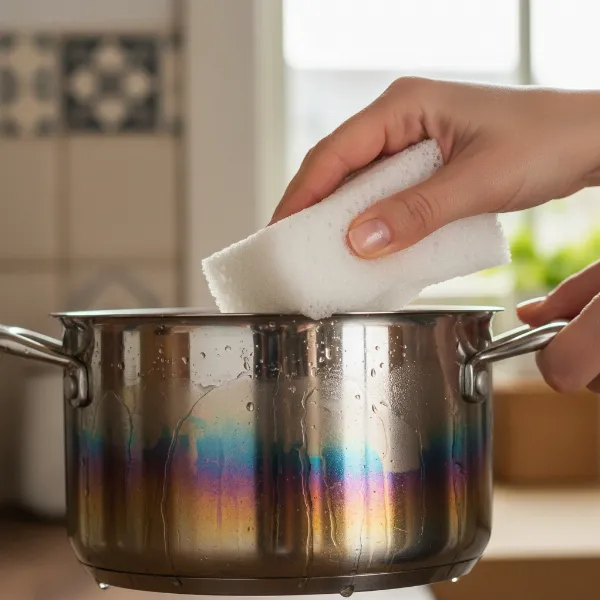 A person applying white vinegar to a discolored stainless steel pot with a soft sponge, demonstrating the cleaning process for heat tint.
Method 2: Baking Soda Scrub (for stubborn stains or yellow/brown discoloration)
For more stubborn yellow, brown, or deeper heat stains, a baking soda paste offers excellent abrasive power.
- Create a Paste: Mix a few tablespoons of baking soda with a small amount of water (or lemon juice for added acidic power) to form a thick paste.
- Apply and Scrub: Apply the paste generously to the discolored areas. Let it sit for 10-15 minutes to allow the baking soda to work its magic. Then, using a non-abrasive sponge or cloth, scrub the stain in a circular motion.
- Boil for Extra Power (Optional): For very persistent stains, you can fill the pan with water, add 2-3 tablespoons of baking soda, and bring it to a boil. Let it simmer for 10-15 minutes, then turn off the heat and let the water cool completely. Once cool, scrub and rinse as usual.
- Rinse and Dry: Rinse thoroughly to remove all baking soda residue and dry immediately.
Method 3: Commercial Cleaners (Bar Keepers Friend)
When household remedies aren’t quite enough, Bar Keepers Friend is a powerful ally.
- Moisten Surface: Lightly moisten the discolored area of your pan.
- Apply Cleaner: Sprinkle a small amount of Bar Keepers Friend powder onto the stain.
- Scrub Gently: Using a wet, non-abrasive sponge, gently scrub the area in the direction of the stainless steel grain. Avoid harsh scrubbing, especially if it’s an older pan, to prevent scratches.
- Rinse Thoroughly: This is crucial. Rinse the pan exceptionally well to remove all traces of the cleanser, as residue can leave a powdery film.
- Dry: Dry immediately with a clean towel.
“The key to successfully cleaning heat discoloration from stainless steel is understanding the science behind it – it’s oxidation. Once you know that, acidic solutions like vinegar or products like Bar Keepers Friend become your best tools.” – Admin of ReviewHT, Household Appliance Technician
Preventing Future Heat Discoloration
An ounce of prevention is worth a pound of cure, especially with stainless steel cookware.
- Control Heat Settings: Avoid using excessively high heat when it’s not necessary. Stainless steel conducts heat very efficiently, so often a medium heat setting is sufficient for most cooking tasks. Overheating is the primary cause of discoloration.
- Preheat Properly: When preheating, do so gradually on medium heat. Don’t leave an empty pan on high heat for extended periods.
- Avoid Drastic Temperature Changes: Never plunge a hot stainless steel pan into cold water. This can not only cause discoloration but also warp the pan, leading to uneven cooking in the future. Always allow your cookware to cool naturally before cleaning.
- Regular Cleaning: Clean your stainless steel cookware thoroughly after every use. Simple dish soap and a soft sponge are usually enough for daily grime, preventing buildup that can exacerbate discoloration.
Expert Tips & Best Practices
- Always Use Non-Abrasive Tools: Harsh scrubbers, steel wool, or abrasive cleansers can scratch the surface of your stainless steel, making it more susceptible to future discoloration and harder to clean. Stick to soft sponges, cloths, or nylon scrubbers.
- Test on an Inconspicuous Area: If you’re unsure about a new cleaning agent or technique, test it on a small, hidden part of the pan first to ensure it doesn’t cause damage or further discoloration.
- Dry Immediately: After rinsing, dry your stainless steel pots and pans promptly with a clean, soft cloth. Air-drying can leave water spots, especially in areas with hard water, which can be mistaken for or contribute to discoloration.
- Patience is Key: Some stubborn stains may require repeated applications or a bit more scrubbing. Don’t get discouraged; consistent, gentle effort usually yields excellent results.
Conclusion
Heat discoloration on stainless steel cookware is a common occurrence, but it’s far from a permanent problem. By understanding that these rainbow, blue, or brown tints are primarily due to oxidation from high heat, you can confidently tackle them with readily available household items like white vinegar, baking soda, or a specialized cleaner such as Bar Keepers Friend. Regular, gentle cleaning and mindful heat control are your best defenses against future heat discoloration, keeping your stainless steel pots and pans looking pristine and performing optimally for years to come. What are your go-to methods for keeping your stainless steel cookware sparkling?
Frequently Asked Questions
Is heat discoloration on stainless steel harmful?
No, heat discoloration on stainless steel, often appearing as rainbow tints or blue/brown stains, is generally not harmful. It’s an aesthetic change caused by surface oxidation and does not affect the safety or cooking performance of your cookware.
Can I use steel wool or abrasive scrubbers to clean heat discoloration?
It is strongly recommended to avoid steel wool or abrasive scrubbers on stainless steel. These tools can scratch the surface, compromising its finish and potentially making it more prone to future staining and harder to clean effectively. Always opt for non-abrasive sponges or cloths.
How can I prevent heat discoloration from occurring on my stainless steel pans?
To prevent heat discoloration, use appropriate heat settings for cooking, avoiding excessively high temperatures when possible. Always allow your pans to cool down naturally before washing, and clean them regularly after each use to prevent residue buildup.